
Dentures and Partials

Modern dentistry provides several options for replacing missing teeth, and dentures continue to be an excellent choice that works well for many people. Modern dentures designed using updated materials and techniques are as close as dentists can get to real teeth using dental prosthetics.
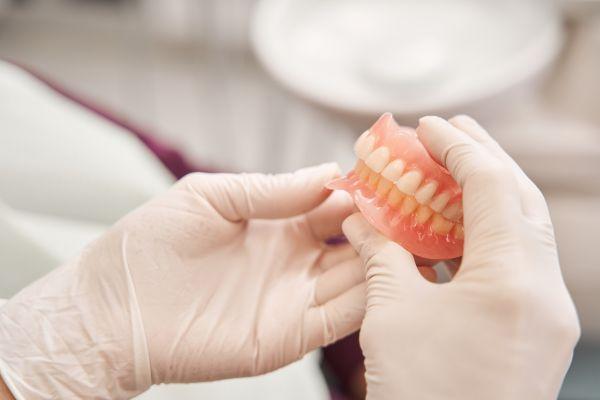
Full and partial dentures are removable dental prosthetics appropriate for patients of all ages who need to replace some or all of their natural teeth.
Types of Dentures
Dentures are available in two types:
- We fit conventional dentures after your gums and jaw have fully healed from the extraction of your teeth.
- We fit immediate dentures before we extract your teeth, so you can wear them the same day we remove your teeth. Immediate dentures require several more fittings than traditional dentures, as the shape of your jaw and gums will change during the healing process. But these dentures have the advantage of immediately restoring your teeth after the extraction.
We use partial dentures when we only need to remove some of your teeth. Partials function similarly to a bridge in that they fit in with remaining teeth, but unlike a fixed bridge, they are removable.
Frequently Asked Questions
It will take your mouth some time to get used to the feel of dentures. After a few months, however, you will feel comfortable eating and speaking with your dentures in and experience little to no soreness or discomfort. If you ever do experience soreness or if your dentures aren’t fitting right, please let us know.
Adjusting to Dentures

When we first fit your dentures, you may have to wear them all the time, including while sleeping. Wearing your dentures allows us to quickly find spots that we need to reshape because of discomfort or irritation. After the dentures are properly fitted to your jaw, you can remove them at night.
While dentures are not real teeth, you should care for them as if they were. Brush your dentures to remove food particles before removing them. You will need to place your dentures in a container of warm water or a denture cleaning solution as soon as you remove them from your mouth. Hot water can warp dentures, so be careful!
It can take some time for your mouth to adjust to the shape of dentures. At first, it may feel awkward and bulky to have the appliances in your mouth, but you will become accustomed to the dentures over time.
Contact our office today for more information on whether dentures are right for you.

Our Team
-
Dr. Lisa Symonds DDS
Lisa Symonds, DDS, is a dedicated dentist at Chinook Family Dentistry. She brings a lifelong passion for oral health and patient care to her work each day. Her journey in dentistry began early; she started working as a sterilization technician for her father in 1992 while still in high school.
During her undergraduate years, she continued to grow in the field by assisting him chairside, experiences that solidified her interest in pursuing a health profession and ultimately led her to dentistry.
Dr. Symonds earned her dental degree from the Northwestern University Dental ...
Read More
Dentures and Partials Technology
Panoramic X-Rays
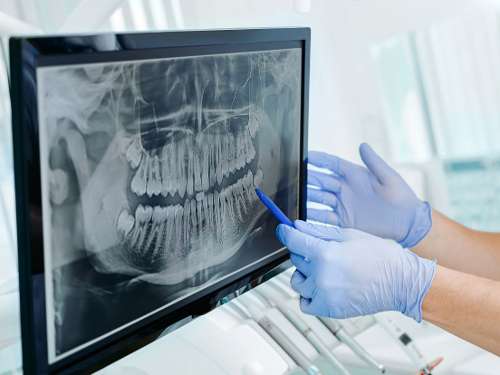
Individual x-rays are beneficial for identifying decay, infection, and many other dental conditions. Having a full-picture view is often helpful, and that’s where panoramic x-rays come in handy. Panoramic x-rays take a full-picture view of the teeth, bone, jaw joints, and other biological landmarks. These types of x-rays are helpful in planning oral surgeries, such as extractions and dental implant placement, as well as identifying tumors, cysts, and jaw joint problems.